


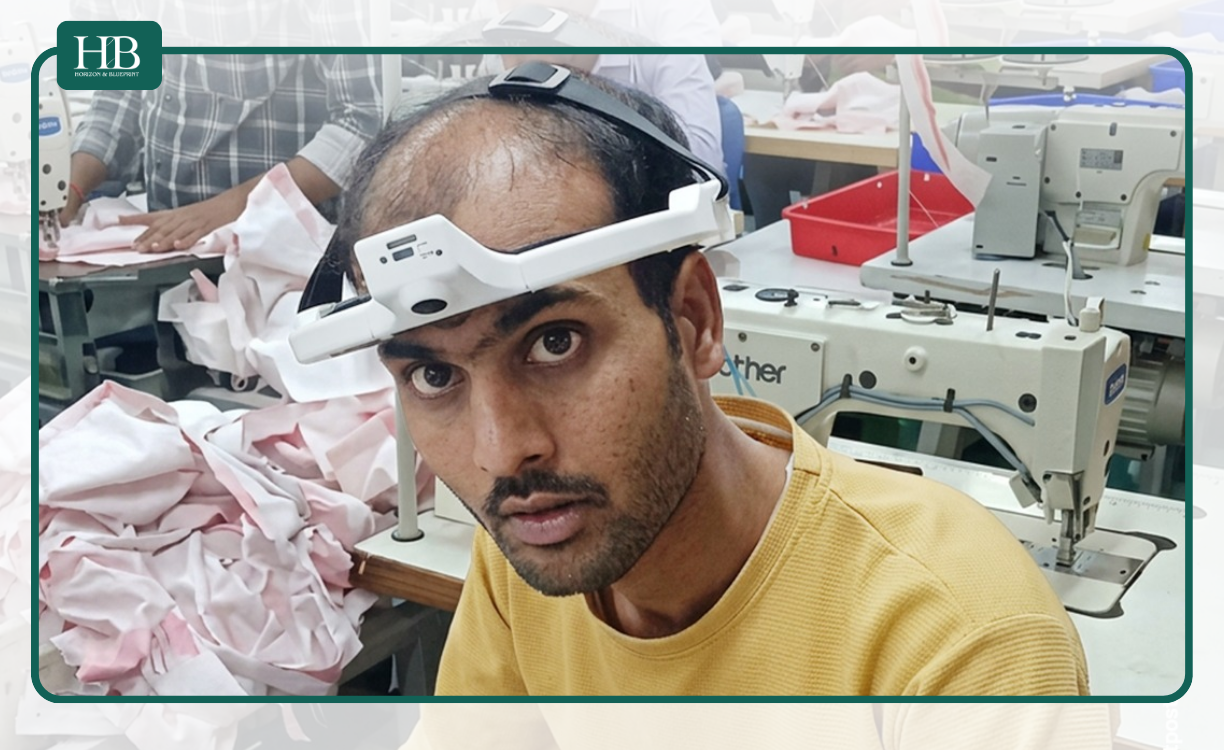
A new trend in industrial workplaces across India is drawing attention, as factory workers are reportedly using head-mounted cameras to record their hand movements for training artificial intelligence (AI) systems. The captured data is then used to help machines learn specific tasks, improving efficiency and advancing automation in various industries.
While this development marks a significant step toward technological progress, it has also raised serious concerns among experts and workers. Many fear that such data collection could eventually lead to job displacement, as machines become capable of performing tasks traditionally handled by humans. Others have pointed out that workers may not be fully aware of how their recorded data is being used or stored.
Privacy is another major issue being highlighted. Experts warn that without clear regulations, such practices could lead to misuse of personal data and lack of accountability. Currently, there are limited specific laws in India that directly address AI data collection in workplace environments.
The situation has sparked calls for better policies, increased transparency, and stronger worker awareness. Ensuring ethical use of technology is essential to balance innovation with the protection of workers’ rights, making this an important issue in the evolving landscape of AI and automation.

